What if you started an Etsy shop today with no audience, no customers, and no sales?
Could you actually build a digital product business from scratch?
That was the question I wanted to answer.
Instead of simply watching other Etsy sellers share their success stories, I decided to run my own experiment.
I opened an Etsy shop, created digital products, learned Etsy SEO, experimented with Pinterest, improved my listings, tested different strategies, and eventually even put some money into Etsy Ads.
And I documented the entire process over six weeks.
The result wasn’t a “make thousands of dollars overnight” story.
It was much more realistic than that.
There were weeks when nothing happened.
There were moments when I questioned the products.
There were days when I kept checking my Etsy dashboard hoping for a sale that simply wasn’t there.
And then, slowly, things started changing.
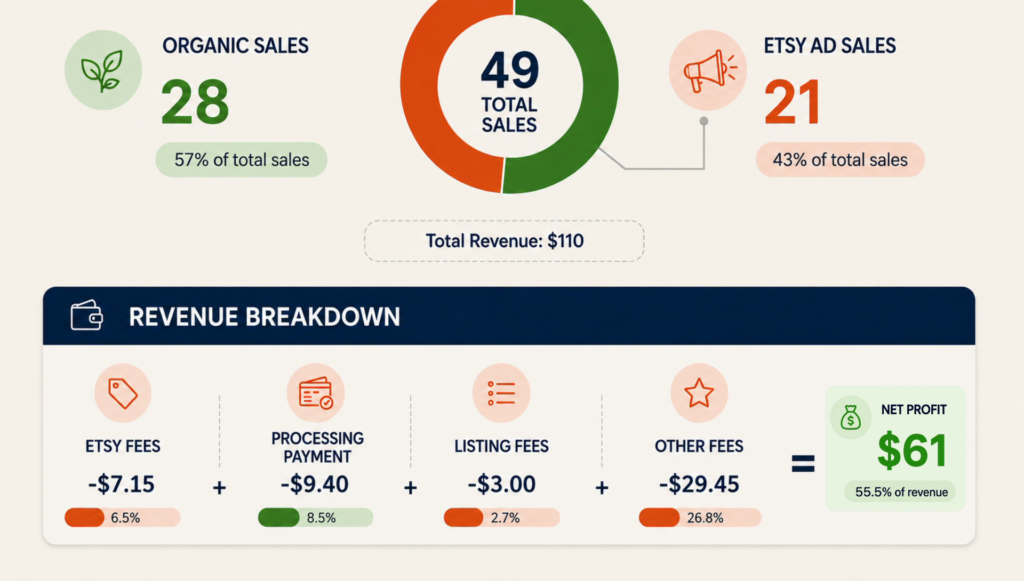
By the end of the six weeks, the shop had 15 products, 49 sales, around $110 in revenue, and approximately $61 in profit after fees and advertising costs.
Was that life-changing money?
No.
But the experiment taught me something much more valuable:
I could actually build an Etsy shop from zero and get real customers.
And that’s what this blog is really about.
🎥 Want to Watch the Entire 6-Week Etsy Challenge?
Before I break down what happened and the lessons I learned, you can watch the complete journey here.
The video takes you through the experiment from beginning to end, including the slow weeks, the first sales, the changes I made, and what happened when I finally tested paid advertising.
If you’re considering starting your own Etsy shop, watching the journey first can give you a much more realistic idea of what the process actually looks like.
Why I Started This Etsy Experiment
There are countless Etsy success stories online.
Someone opens a shop.
They upload a few products.
Then suddenly they’re making hundreds or thousands of dollars.
Those stories can be motivating.
But they can also leave out one very important part of building a business:
The waiting.
The uncertainty.
The zero-sales days.
The products that don’t perform.
The thumbnails you redesign.
The keywords you change.
The listings you question.
The constant feeling that maybe you’re doing something wrong.
That’s the part I wanted to document.
The goal wasn’t to prove that anyone can become an Etsy millionaire in six weeks.
The goal was much simpler:
Can I start from nothing, learn as I go, and see whether I can generate real Etsy sales?
And I wanted to show the process rather than only showing the final number.
The Beginning: Starting With Absolutely Nothing
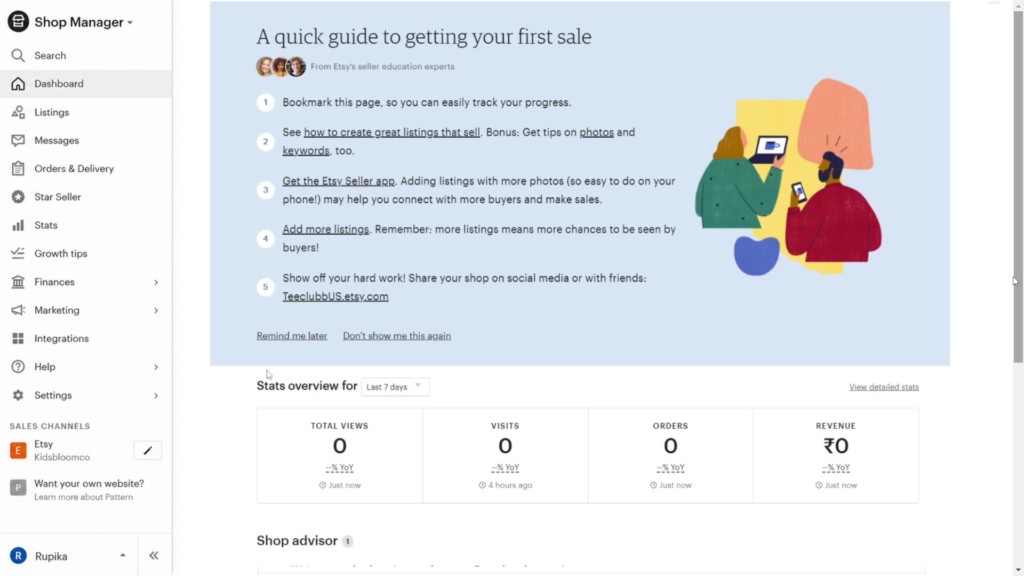
When I started the challenge, the shop didn’t have an established audience waiting for it.
There were no existing customers.
There were no sales.
There was no proven product.
It was essentially a blank starting point.
That meant every part of the business had to be figured out.
I had to create products.
I had to understand Etsy SEO.
I had to figure out how to present the products.
I started experimenting with Pinterest.
And, perhaps most importantly, I had to learn how to be patient.
The early stage of an Etsy shop can feel strangely quiet.
You can spend hours working on something and then open your dashboard and see almost nothing.
And that’s exactly what happened.
The First Big Lesson: Traffic Doesn’t Automatically Mean Sales
By Week 3, something finally started happening.
People were visiting the shop.
There were views, clicks, and favorites.
That was exciting because, only a few weeks earlier, the shop hadn’t existed.
But there was one major problem:
Nobody was buying.
And that forced me to ask a different question.
Instead of:
“How do I get more traffic?”
I started asking:
“Why isn’t the traffic converting?”
That distinction became one of the biggest lessons of the entire experiment.
The Week 3 script captures this turning point: there was finally activity in the shop, but no purchases, which led to a closer look at the shop itself rather than simply chasing more traffic.
I Started Looking at My Shop Like a Customer
This was probably one of the most useful things I did.
I stopped looking at the shop as its owner.
Instead, I imagined that I had just discovered it for the first time.
Would I trust it?
Would I understand what it sells?
Would I feel comfortable purchasing?
And honestly, I wasn’t completely convinced.
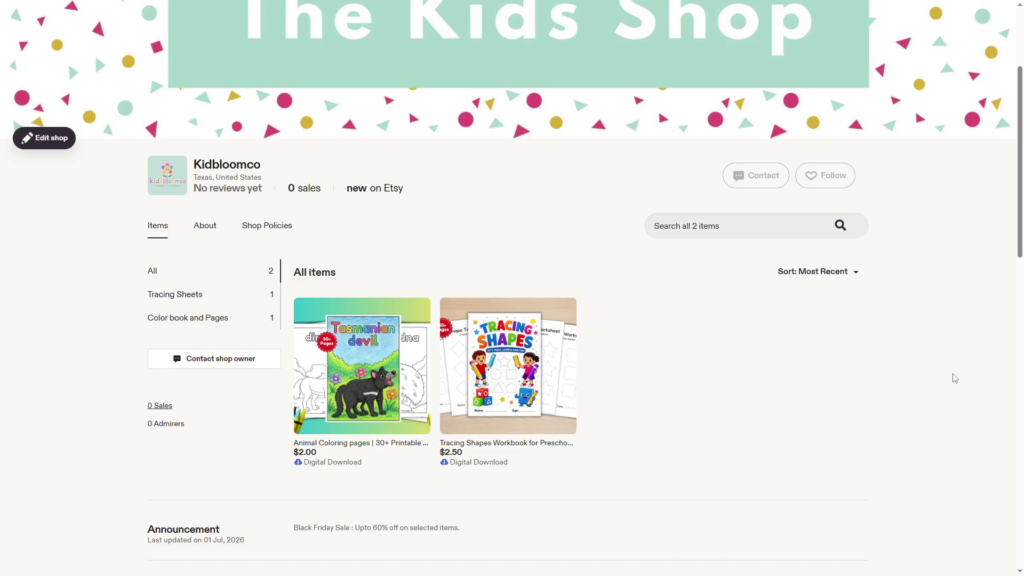
The shop was still small.
There weren’t many products.
There were no reviews.
There weren’t customer photos or other signals showing that people had already purchased from the shop.
That made me realize something important:
Customers don’t judge just one product.
They judge the entire shopping experience.
A great product sitting inside a shop that looks unfinished may not inspire the same confidence as that same product inside a complete, well-presented store.
I Stopped Focusing Only on SEO
At this point, it would have been easy to keep obsessing over keywords.
Change a title.
Add another keyword.
Rewrite the description.
Change the tags.
Repeat.
But I decided to take a step back.
Instead of focusing only on getting people into the shop, I started working on what happened after they arrived.
I looked at successful Etsy shops.
But this time, I wasn’t primarily studying their products.
I was studying how they created trust.
I looked at:
- Product collections
- Thumbnails
- Branding
- Descriptions
- Shop presentation
- Overall organization
And I noticed that successful shops often felt complete rather than empty.
That changed how I approached my own shop.
Building a Shop Instead of Just Uploading Products
One of the first changes I made was creating more products.
But I wasn’t interested in uploading random products just to increase the number of listings.
I wanted the products to make sense together.
They needed to fit the same general audience and visual direction.
The goal was to make the shop feel like an actual store rather than a small experiment with a few files sitting inside it.
That made a surprisingly big difference to how the shop felt.
Every additional relevant product made the store look more complete and gave customers more to explore.
And this taught me an important lesson:
Don’t think only about individual Etsy listings.
Think about the shop as a whole.
Your Thumbnail Might Matter More Than You Think
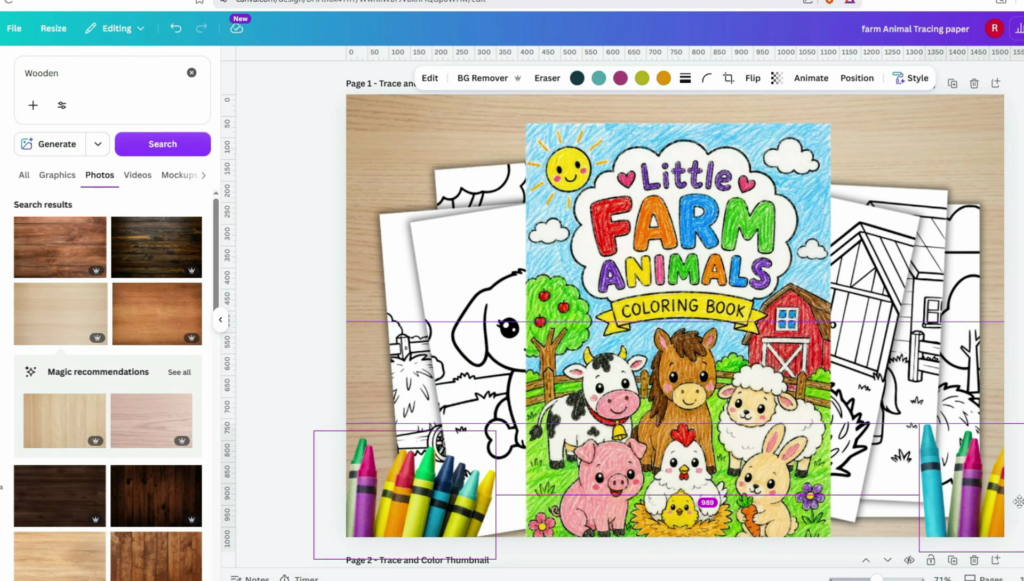
I also went back and looked at my thumbnails.
The more Etsy shops I studied, the more obvious something became:
People make decisions very quickly.
Before they read your entire description.
Before they look at every detail.
Before they compare every option.
They see your product image.
So I started cleaning up my thumbnails.
I simplified layouts.
I made the information easier to understand.
I tried to make the visual style more consistent.
The changes weren’t necessarily dramatic.
But the shop looked more professional afterward.
And that’s something worth remembering when creating digital products:
Your product can be good, but customers need to understand its value quickly.
Then Something Finally Happened…
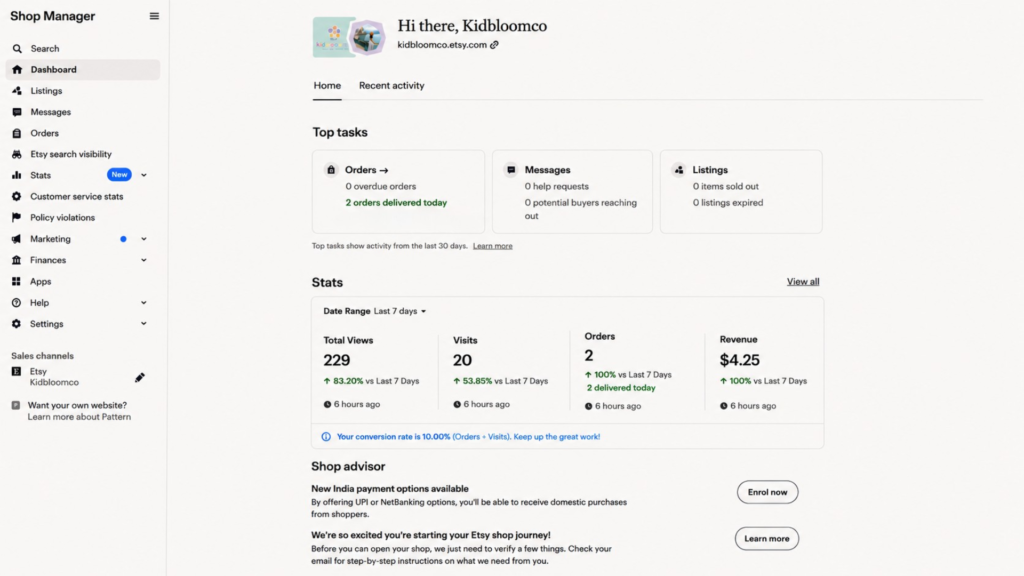
After weeks of working, testing, changing, and waiting…
I got my first sale.
Actually…
I got two.
The first sale was exciting.
But almost immediately, I had another thought:
Why did they buy?
Was it Pinterest?
Was it Etsy SEO?
Was it the improved thumbnails?
Was it the product bundle?
Or was it simply luck?
The Week 4 experiment became less about celebrating the sales and more about understanding what caused them.
And that distinction matters.
Because getting one sale is exciting.
But knowing why you got the sale is much more useful.
The First Sale Isn’t the Finish Line
This was one of the biggest mindset changes during the challenge.
At the beginning, the question was:
“Can I get a sale?”
After those first two orders, the question became:
“Can I do it again?”
One sale can happen by chance.
Two sales might still be coincidence.
But if sales continue coming in, you can start looking for patterns.
So I began studying:
- Where traffic was coming from
- Which listings were performing better
- Which Pinterest posts were getting attention
- Which thumbnails were getting clicks
- Which changes I had made before the sales
The goal was no longer simply to get lucky.
It was to find something repeatable.
Week 5: The Shop Started Showing Momentum
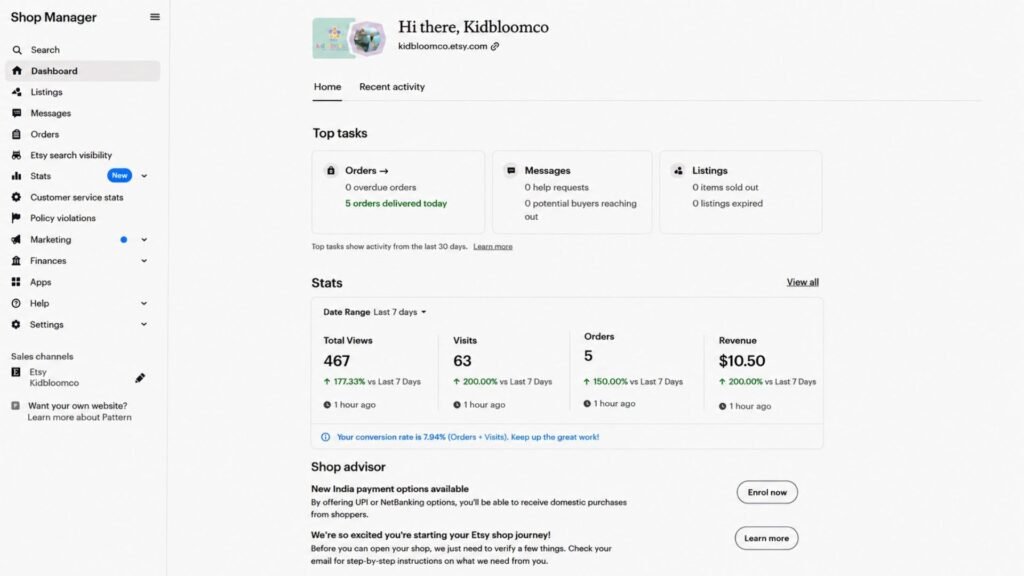
Then another shift happened.
Sales continued.
By the end of Week 5, I had crossed five sales.
Again, five sales isn’t an enormous number.
But you have to look at it in context.
Five weeks earlier, the shop didn’t exist.
There were no products.
No customers.
No audience.
And now actual people were discovering the products and purchasing them.
That changed the question completely.
I wasn’t asking:
“Does Etsy work?”
I was starting to ask:
“How far can I take this?”
Everything So Far Had Been Organic
Another interesting part of the experiment was that the sales had happened without paid advertising.
The traffic and sales had come through things such as:
- Etsy SEO
- Better listings
- Improved thumbnails
- Product changes
- Testing
That made me curious.
If the shop was beginning to generate sales organically, what would happen if I added paid traffic?
So I decided to take a risk.
I Turned On Etsy Ads
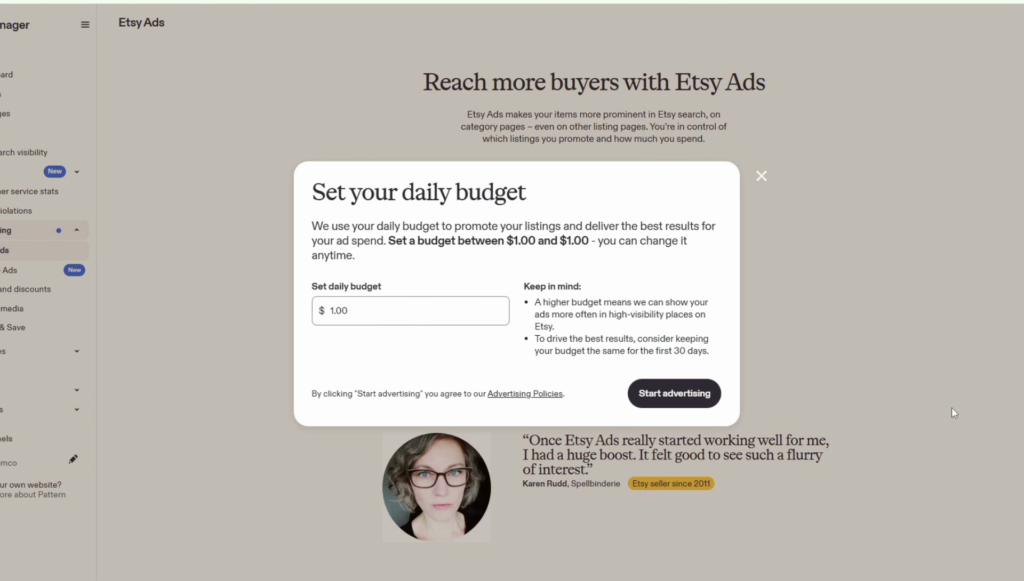
Until this point, the experiment had mostly cost me time.
Now I was putting actual money into the business.
I went back through the listings again.
I checked:
- Products
- Thumbnails
- Titles
- Keywords
- Listings
Then I launched Etsy Ads.
That moment felt different.
It wasn’t just an experiment anymore.
It started to feel like an actual business decision.
And it also introduced another important lesson:
Advertising can’t fix everything.
Ads can help bring shoppers to your listing.
But once they arrive, the product, presentation, pricing, and overall listing still have to do the job.
What Happened in the Final Week?
By Week 6, I had a completely different perspective than I did at the beginning.
The challenge wasn’t about wondering whether someone would ever buy.
I already had proof that people would.
Now I was looking at the bigger picture:
Could the process become repeatable?
And this is where the numbers became important.
After six weeks:
15 Products
The shop had grown from nothing to 15 digital products.
49 Total Sales
The shop generated 49 sales during the challenge.
28 Organic Sales
These came without Etsy Ads.
21 Sales From Etsy Ads
Paid advertising contributed 21 sales.
Around $110 Revenue
The shop generated approximately $110 in revenue.
Around $61 Profit
After Etsy fees, payment processing, listing fees, and advertising expenses, approximately $61 remained as profit.
Now, let’s be honest.
$61 in profit after six weeks isn’t life-changing.
And I don’t want to pretend that it is.
But that’s not what made the experiment valuable.
The Real Result Wasn’t $61
The most important result was proof.
Six weeks earlier, there was nothing.
No products.
No customers.
No sales.
No established Etsy business.
Six weeks later, there were real customers who had purchased products I created.
That changed the way I thought about the entire process.
Because now I knew something I couldn’t have known at the beginning:
It was possible.
Not necessarily easy.
Not necessarily fast.
Not necessarily guaranteed.
But possible.
What I Learned From the 6-Week Etsy Challenge
The numbers are interesting.
But the lessons are even more useful.
Here are the biggest things I learned.
1. Don’t Expect Instant Results
One of the hardest parts of building an Etsy shop is the waiting.
You can spend hours creating a product and then see absolutely nothing happen.
That’s normal.
The internet often shows the result.
It doesn’t show the boring middle.
During the challenge, there were plenty of periods where the dashboard simply wasn’t doing anything.
And that can make you question everything.
But lack of immediate sales doesn’t automatically mean your business won’t work.
Sometimes you simply haven’t collected enough information yet.
2. Traffic Is Only One Piece of the Puzzle
Getting people to your shop is important.
But traffic doesn’t automatically become revenue.
If people visit but don’t purchase, you need to investigate what happens after the click.
Look at:
- Product presentation
- Thumbnails
- Product value
- Description
- Pricing
- Trust
- Shop appearance
- Product selection
In my case, Week 3 forced me to stop thinking only about traffic and start thinking about conversion and trust.
3. A Complete Shop Builds More Confidence
Having only a handful of listings can make a new shop feel unfinished.
Adding relevant products helped the shop feel more like a real store.
But there’s an important distinction:
Don’t add products just to hit a number.
Create products that make sense together.
If someone likes one product, give them another product they might also want.
That’s how individual listings can start becoming a product collection.
4. Small Improvements Add Up
One of the biggest lessons from the challenge was that there wasn’t necessarily one magical change.
I made lots of small adjustments:
- Titles
- Keywords
- Thumbnails
- Bundles
- Product presentation
- Listings
Individually, many of those changes didn’t feel significant.
Together, they started making a difference.
Looking back at the entire six weeks, this was one of the clearest lessons: small improvements can compound over time.
5. Don’t Just Look at What Worked — Understand Why
When you get your first sale, it’s tempting to celebrate and move on.
But I think the better question is:
Why did that person buy?
Where did they come from?
Which product did they purchase?
What brought them to the listing?
What did you change beforehand?
Could you repeat it?
That’s how you move from:
Random sales
to:
A strategy you can learn from.
6. Don’t Compare Your Beginning to Someone Else’s Year Five
This challenge also reminded me how misleading online success stories can be.
You often see:
“I made $10,000 on Etsy!”
But you don’t see all the products that didn’t sell.
You don’t see the months of testing.
You don’t see the failed ideas.
You don’t see the hours spent learning.
And you definitely don’t see all the times someone refreshed their dashboard and saw nothing.
The actual process can be much slower and less glamorous.
And that’s okay.
7. Profit Matters More Than Revenue
Another important lesson from the experiment was looking beyond sales.
Revenue is not profit.
If you’re running Etsy Ads or paying other business expenses, you need to consider those costs.
The shop generated about $110 in revenue but ended with approximately $61 in profit after expenses.
That difference is important.
When evaluating an Etsy business, don’t only ask:
“How many sales did I make?”
Also ask:
“How much did I actually keep?”
8. Your First Sale Changes Your Mindset
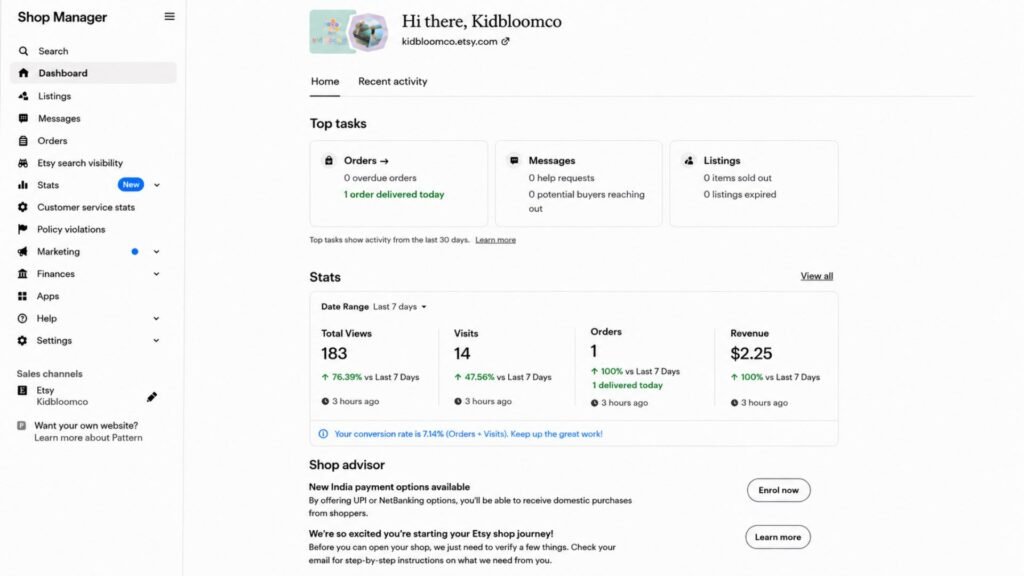
There’s something psychologically different about your first real customer.
Before the first sale, you’re wondering:
“Will anyone actually buy this?”
After the first sale, you know the answer.
Someone did.
That doesn’t mean the business is suddenly successful.
But it gives you evidence.
And that evidence can change your mindset from:
“Does this work?”
to:
“How can I improve it?”
That was exactly the shift I experienced between the early weeks and the later part of the challenge.
What I Would Do Differently Next Time
If I were starting another Etsy shop from zero, I wouldn’t approach it as a race to upload as many products as possible.
I’d focus much more deliberately on:
A Clear Customer
Know exactly who you’re creating for.
A Strong Product Idea
Solve a specific problem rather than simply creating something because it looks cute.
Better Product Presentation
Make the value obvious from the first image.
A Related Product Collection
Build products that naturally fit together.
Continuous Testing
Change one thing, observe what happens, and learn.
Tracking Profit
Don’t look at revenue alone.
The biggest takeaway is that you don’t need to know everything before opening an Etsy shop.
But you do need to be willing to learn while you’re building.
The Biggest Lesson: Progress Doesn’t Always Look Like Sales
This might actually be my favorite lesson from the entire challenge.
There were weeks when I didn’t have sales.
But that doesn’t mean nothing happened.
I was:
- Learning Etsy SEO
- Improving products
- Creating listings
- Studying competitors
- Improving thumbnails
- Testing Pinterest
- Learning what customers responded to
- Building the shop
And eventually, those small improvements started showing up in the numbers.
That’s why I think it’s important to measure more than sales when you’re starting.
Look at:
Views → Visits → Clicks → Favorites → Sales → Repeatable patterns
Each step gives you information.
🎓 Would You Want a Step-by-Step Etsy Course?
After sharing this six-week journey, I started getting questions about the process.
Things like:
- How did I choose the niche?
- How did I create the printables?
- How did I set up the Etsy shop?
- What did I do for Etsy SEO?
- How did I create the listings?
- When did I start using ads?
- What mistakes did I make?
- What would I do differently?
I’ve documented the answers throughout the challenge.
And it made me think:
Would it be useful to turn everything into a structured, step-by-step Etsy course?
Instead of making someone piece together six weeks of videos, the course could organize the process from the beginning:
Choose a niche → Create products → Set up your shop → Create listings → Learn Etsy SEO → Promote → Get your first sale → Improve and grow
The idea would be to take everything I learned during the experiment and turn it into a much easier roadmap for someone starting from scratch.
The final challenge script specifically raises this idea, including the shop setup process, first sale, mistakes, templates, and lessons from the six-week experiment.
📝 Help Me Decide What to Include in the Course
Before creating a full course, I want to know whether it’s actually something you’d find useful.
So I’ve created a quick survey.
Tell me what you’d want help with most:
- Finding a profitable niche
- Creating digital products
- Setting up an Etsy shop
- Etsy SEO
- Creating listing images
- Writing Etsy listings
- Pinterest marketing
- Etsy Ads
- Getting the first sale
- Growing an Etsy shop
- Something else
Your answers will help shape the course around the things people actually want to learn—not just what I think should be included.
It only takes a few minutes, and your feedback can help decide whether I create the course and what goes inside it.
Is Etsy Still Worth Trying?
After six weeks, I don’t think the right question is:
“Can I guarantee you’ll make money on Etsy?”
Nobody can honestly promise that.
Your niche, products, pricing, presentation, competition, marketing, and execution all matter.
Instead, I’d ask:
“Am I willing to treat Etsy like a business experiment and give myself enough time to learn?”
Because that’s what this challenge really became.
It wasn’t six weeks of magically creating passive income.
It was six weeks of:
Creating → Testing → Waiting → Learning → Improving → Testing again.
And eventually, the numbers started moving.
My Final Takeaway
When I opened the shop six weeks earlier, I had no idea where the experiment would end.
There were moments when I thought the shop wasn’t working.
There were weeks with no sales.
There were plenty of doubts.
Then came the first order.
Then another.
Then more.
By the end, there were 49 sales.
Not thousands.
Not a life-changing income.
But enough to prove that the process could work.
And perhaps the most valuable lesson wasn’t about Etsy at all.
It was about starting something before you feel completely ready.
Because six weeks ago, I didn’t have a successful Etsy shop.
I didn’t have customers.
I didn’t have a proven strategy.
I just had an idea and a willingness to test it.
Six weeks later, I had data, customers, mistakes, lessons, and a much better understanding of what it takes to build a digital product shop.
And that’s exactly why I believe the most important part of starting an Etsy business isn’t trying to make everything perfect.
It’s starting, learning, and improving as you go.
🎥 Watch the Full 6-Week Etsy Challenge
If you want to see exactly how this journey unfolded—not just the final numbers—I recommend watching the complete challenge.
You’ll see the highs, the slow weeks, the first sales, the experiments, the mistakes, and the final results.
Because the final number only tells you where I ended up.
The six-week journey shows you how I got there.
Ready to Start Your Own Etsy Journey?
You don’t need 100 products.
You don’t need a huge audience.
And you don’t need to know everything before you begin.
Start with one idea.
Research it.
Create the product.
Set up the shop.
Publish the listing.
Then learn from what happens next.
Your first goal doesn’t have to be making hundreds of dollars.
It can simply be getting your first product live.
Then your first visitor.
Then your first favorite.
Then your first sale.
And from there, you build.
Want to Help Shape the Etsy Course?
Tell me what you want to learn, what you’re struggling with, and what you’d want included in a step-by-step Etsy course.
Because if I create it, I want it to be based on what you actually need—not just what I think you need.